We Need Witnesses: The Night Tesla Had to Prove It Wasn’t AI
To unveil its new car, the world’s most famous tech company had to bring in a live audience to vouch that it wasn’t artificial intelligence. In politics, that moment has already arrived.
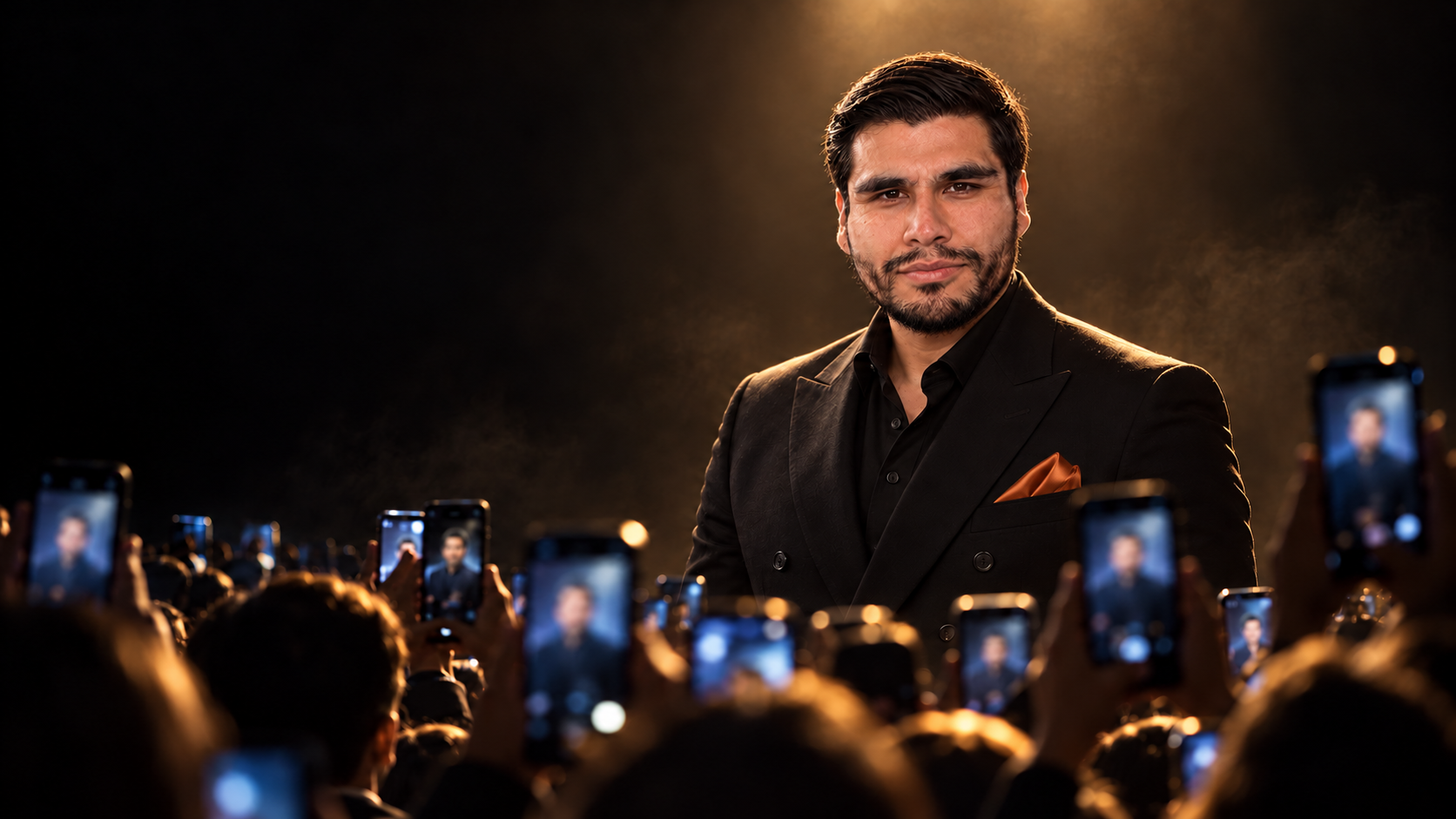
On Thursday night, Tesla unveiled its new Roadster. The car climbed a curved ramp, went upside down, launched off the end, flipped in mid-air and landed. Then it jumped, also flipping, over a row of cars. The whole thing was livestreamed on YouTube.
But the most revealing moment of the night wasn't the car. It was one sentence from Elon Musk: "We need an audience to prove that it's not AI."
He had said it weeks earlier on a podcast: the launch would have a live audience so someone could vouch that what people were seeing was real. Even the host who had previewed the demo admitted his first reaction was that it had to be a simulation.
Think about what that means. The company that has invested more than anyone in convincing us the future is already here had to fall back on the oldest technology of trust: people who were there and saw it with their own eyes.
Seeing is no longer believing
For a century, the image was the proof. If there was video, it happened. That rule is broken. Today a perfect video proves nothing, because anyone can produce an equally perfect one.
The next day, fact-checkers had to confirm the footage was authentic. The evidence wasn't the quality of the picture. It was the clips attendees recorded on their own phones, the journalists who were in the room, and the absence of any trace of editing. Proof that something is real no longer lives in the content. It lives in who witnessed it.
And still, the argument went on. Some said the audience was fake. Others said the car doesn't "fly," it just falls in a controlled way. Reality needed witnesses and fact-checkers, and even then it didn't convince everyone.
The liar's dividend
There is an effect even more dangerous than fake videos: real videos stop mattering. When anything can be AI, anything inconvenient can be dismissed with three words: "That's AI-generated." Scholars call it the liar's dividend. The liar no longer needs to fabricate a lie. It is enough to cast doubt on the truth.
Seven years ago, at Harvard Law School, I gave a talk called Fake News, Bots & Trolls: The Dark Side of Social Media. The warning then was that the real damage would not come only from false content, but from what it does to our ability to trust anything at all. That warning is more current today than it was in 2019. Back then we were talking about bots repeating a message. Today we are talking about machines that can fabricate a face, a voice and an event that never happened.
If Tesla, with millions of viewers and a live event, had to ask for witnesses, imagine what a candidate for governor will face, or a mayor in the middle of a crisis, or a company accused with an audio clip that never existed.
What this changes in a campaign
In the campaigns I have worked on across three continents, the question used to be how do we get the message out? The question of this decade is different: how do we get people to believe it is real?
That changes strategy in at least four ways:
- Presence matters again. The rally, the walk through the neighborhood, the event with witnesses stop being staging and become evidence.
- Document before you need to. Original recordings, timestamps, locations, multiple cameras and independent third parties. Verification is prepared before the crisis, not during it.
- Credible witnesses are an asset. Journalists, observers and ordinary people with their phones. In the age of AI, a thousand clips from the crowd are worth more than one perfect production.
- Speed of rebuttal is strategy. In the gap between a fake going viral and the truth being confirmed, the conversation is won or lost.
We are what we show
I have said it on many stages: we are what we show; let us mind what we post, and confirm what we share. This week, one of the most powerful brands on the planet proved it without meaning to. To be believed, showing was not enough. It had to prove.
Trust has become the scarcest infrastructure in democracy, and no one is going to hand it to us. Whoever learns to build it, with verifiable facts, witnesses and transparency, will have the advantage in the next election.